
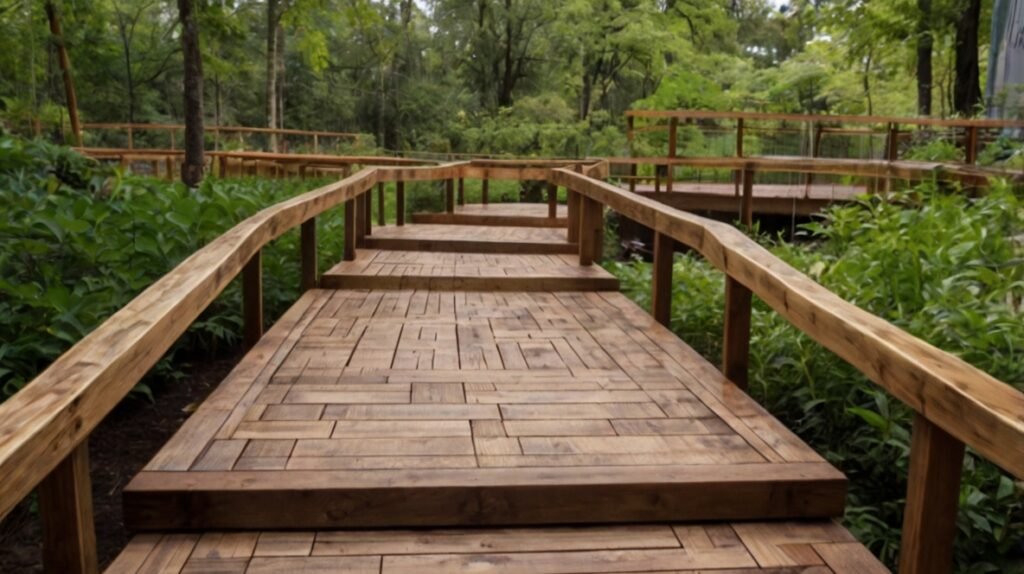
Unique wooden walkway designs can completely transform outdoor spaces, adding charm, functionality, and a touch of artistry to gardens, yards, and patios. A wooden walkway isn’t just practical—it can guide visitors, highlight landscaping, and create a sense of flow throughout your property.
Creative ideas include alternating plank patterns, curved paths that mimic natural contours, or incorporating mixed materials like stone or gravel for contrast. Raised wooden boardwalks over gardens or ponds add visual interest and a sense of adventure.
Finishing touches like built-in lighting, planters, or railings can enhance safety while creating a cozy, inviting atmosphere. By experimenting with shapes, textures, and finishes, a wooden walkway can become a signature feature of your outdoor space. Whether rustic, modern, or eclectic, these designs combine practicality with aesthetic appeal, turning a simple path into a stunning journey through your garden.
Garden Nook Escape
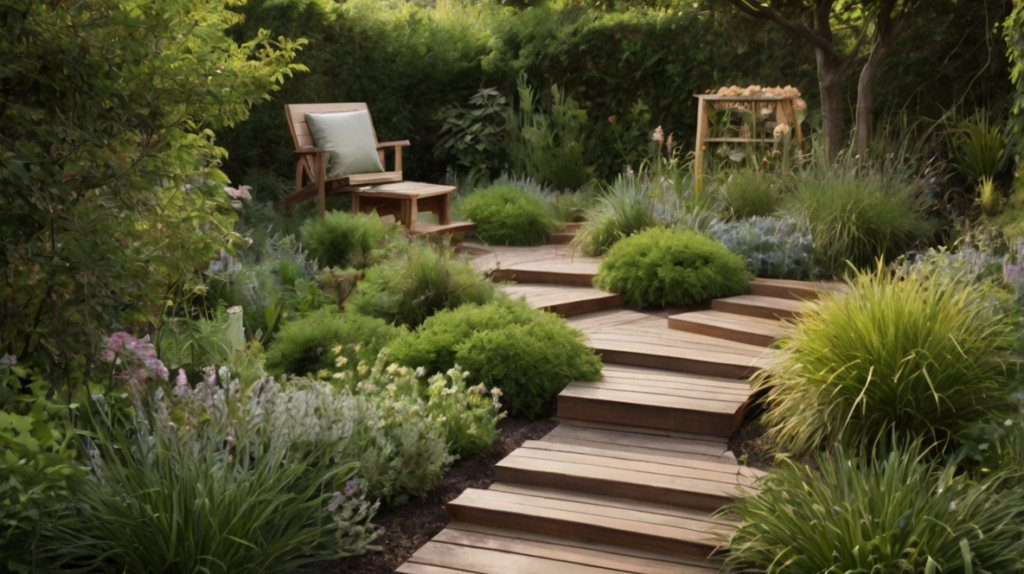
Picture a lush garden with a wooden deck, a single lounge chair, and a soft cushion, surrounded by dense greenery. A stepping stone path winds naturally through the space, offering both charm and functional walkway inspiration. This serene setup feels as if it has been lifted straight from a European countryside storybook.
The gently curved wooden planks guide your steps through foliage, leading to a cozy deck perfect for quiet moments or casual reading. Birds chirp in the background, and the layering of grass, trees, wood, and fabric creates a grounded, organic atmosphere. It’s a space that encourages slowing down, reminding you that outdoor living is as much about texture and rhythm as it is about scenery.
Timber in Progress
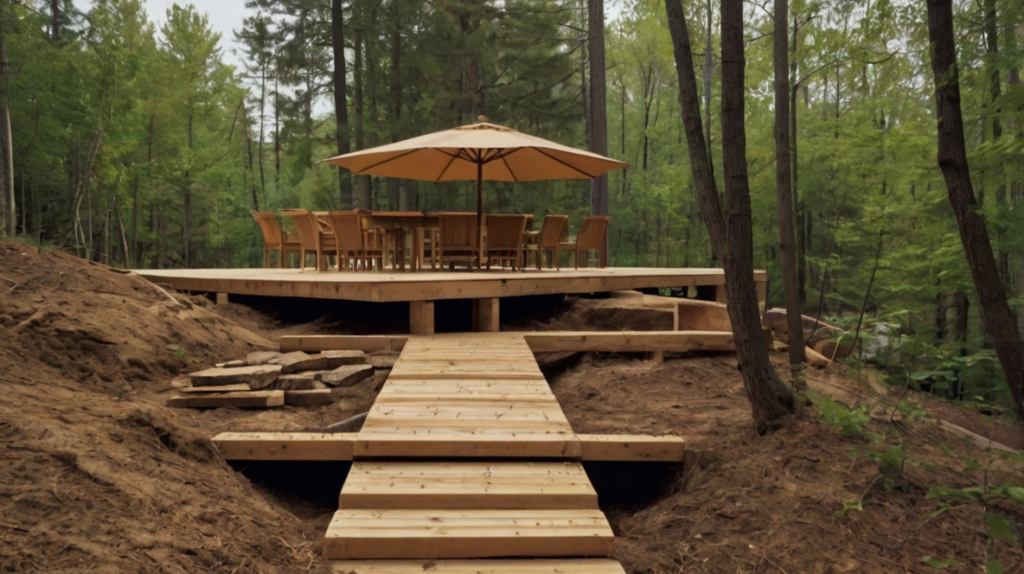
Even beautiful pathways start somewhere. Here, robust wooden beams lie in parallel at a construction site, hinting at the framework for a modern, striking boardwalk. Nearby, a tree and a partially built deck suggest how this structure will eventually integrate seamlessly with its surroundings. The rawness of this scene is a reminder that craftsmanship and design are iterative processes.
There’s a sense of tension between nature and structure—a preview of architectural precision meeting organic beauty. This “in-progress” stage is inspiring for anyone considering a custom wooden walkway, showing that patience and thoughtful planning produce pathways that are both functional and visually compelling.
Woodland Zigzag

Once completed, the boardwalk takes on a playful zigzag pattern beneath trees, surrounded by ferns and mulch. Each plank feels intentional, following the contours of the woodland floor without imposing artificial rigidity. The scattered greenery adds texture and softness, creating a harmonious dialogue between natural growth and human design.
This type of walkway transforms a simple stroll into a rhythmic experience, blending geometry with the untamed charm of a forest. It’s a reminder that even structured paths can feel immersive and intimate when paired thoughtfully with their environment.
Curved Garden Classic

Some garden paths are timeless, subtle, and quietly elegant. This gently curved walkway, made from wood-look stepping stones, meanders through pristine grass and lush greenery, creating a sense of permanence as if it has always been part of the landscape.
The addition of urn planters, stone walls, and well-placed shrubs enhances the classic aesthetic without overwhelming it. The curve encourages a sense of discovery, inviting visitors to pause and enjoy each layer of the garden. This design is ideal for homeowners who want a pathway that feels both refined and approachable.
Sleek & Sculptural
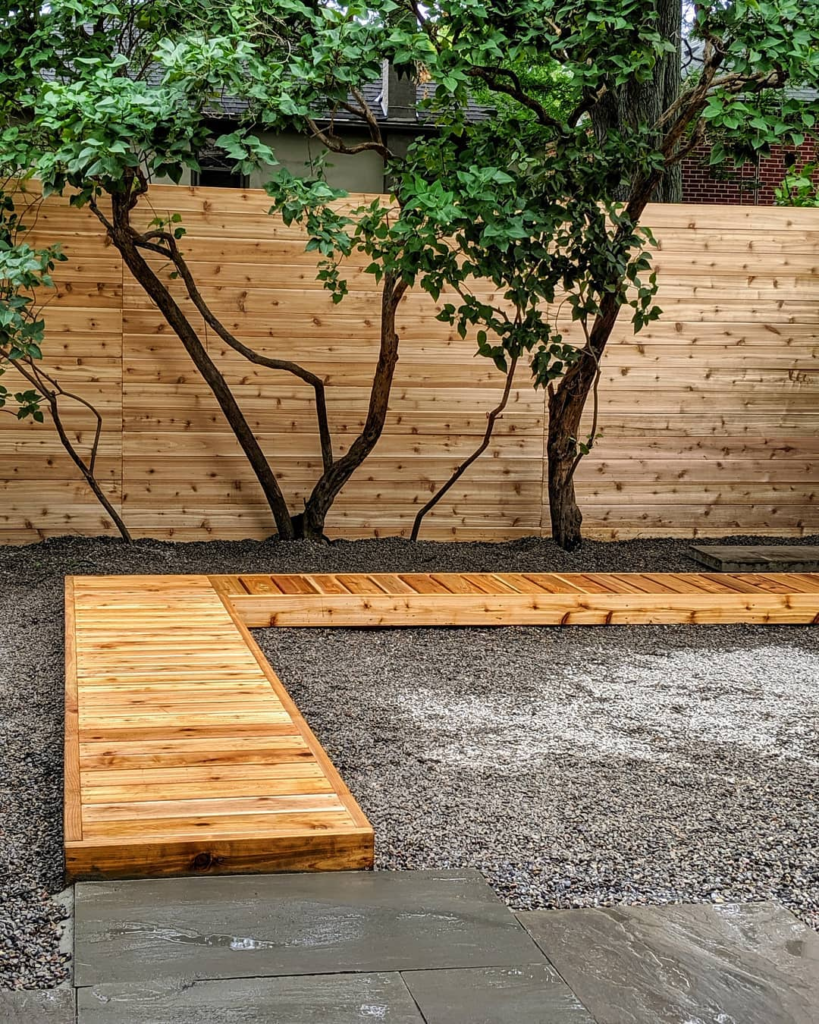
Minimalist enthusiasts will appreciate a raised cedar walkway that floats over gravel, forming an elegant L-shape. Its clean lines contrast beautifully with sculptural trees and a layered wooden fence, combining natural warmth with architectural clarity.
The tactile wood grain softens the geometric form, creating a serene, meditative pathway that balances function with style. Spaces like this prove that modern simplicity doesn’t have to sacrifice personality; careful placement and material choice transform a practical walkway into a quiet design statement.
Geometric Flow

Sometimes, modular design creates the most harmonious outdoor experiences. A wooden walkway paired with white pebbles and lush plants delivers rhythm and structure without overshadowing the surrounding greenery.
The linearity of the wood contrasts with the organic forms of foliage, giving the path a contemporary feel reminiscent of hidden courtyard gardens or serene spa landscapes. This approach demonstrates how careful repetition and proportion can elevate a simple walkway into an intentional, calming journey for anyone traversing it.
Sculptural & Soft

A curved wooden pathway through sandy areas and grassy mounds merges organic form with sculptural intent. Transitions from slate stepping stones to wood boards are subtle yet impactful, creating a layered journey that feels both natural and thoughtfully curated.
Whimsical curves add charm without overwhelming the design, inviting visitors to wander slowly and enjoy each tactile surface. This type of walkway proves that soft, flowing lines can coexist with structured landscapes to create a playful and immersive garden experience.
Artful Angles

Geometric precision can make a walkway an art form. A wooden deck arranged in creative, angular patterns highlights the natural variation of timber grain, making each plank a feature rather than a filler.
When paired with shrubs and architectural building elements, the pathway becomes a sculptural focal point that balances beauty with usability. This design encourages homeowners to view their deck or garden not just as a functional space but as an opportunity for creative expression.
Repurposed Charm
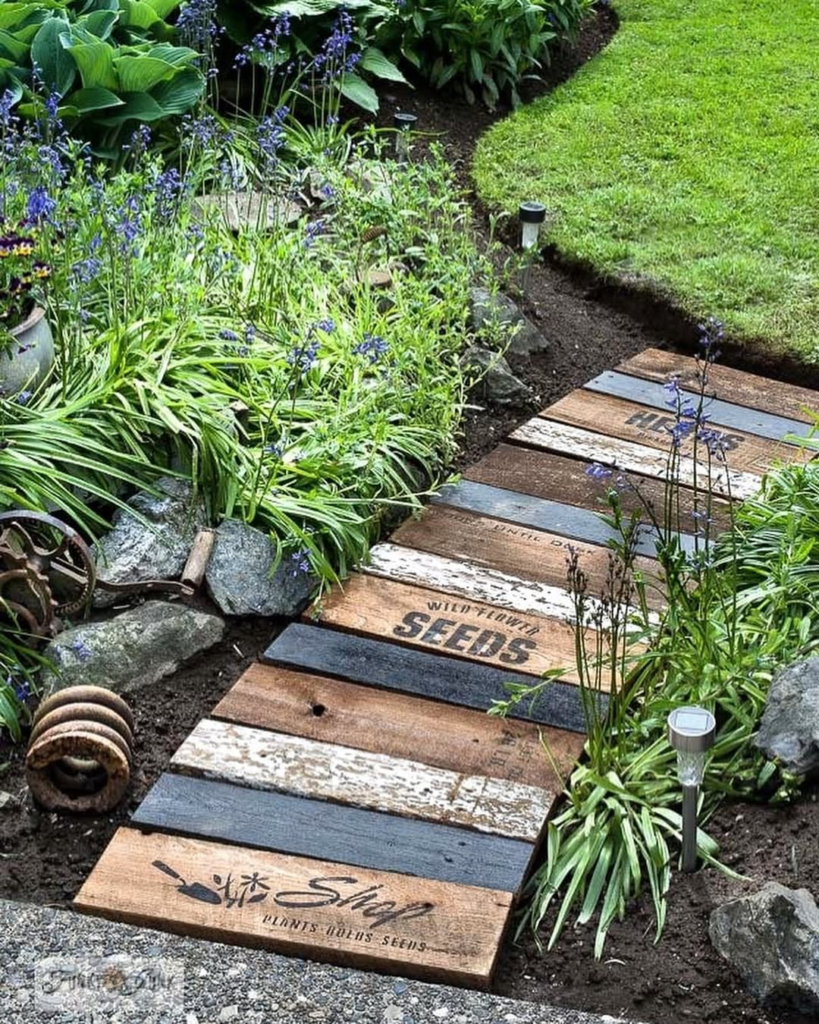
Reclaimed wooden planks can create pathways full of character. Weathered boards with stamped text or subtle imperfections add storytelling to every step, complementing green borders, flowers, and small solar lights.
This approach celebrates imperfection and individuality, turning a simple walkway into a rustic narrative. A path like this is not only eco-conscious but also imbues a garden with warmth, personality, and the playful allure of a vintage European courtyard.
Gravel Meets Grain

Contrasting materials create interest and movement. Warm wooden planks set over soft gravel guide visitors toward a cozy swing or entrance, softened by lavender-lined borders.
This combination balances structure with softness, ensuring the path feels both practical and inviting. Incorporating tactile, contrasting surfaces in a garden walkway allows for visual intrigue while maintaining functionality, perfect for contemporary outdoor spaces.
Geometric Garden Steps
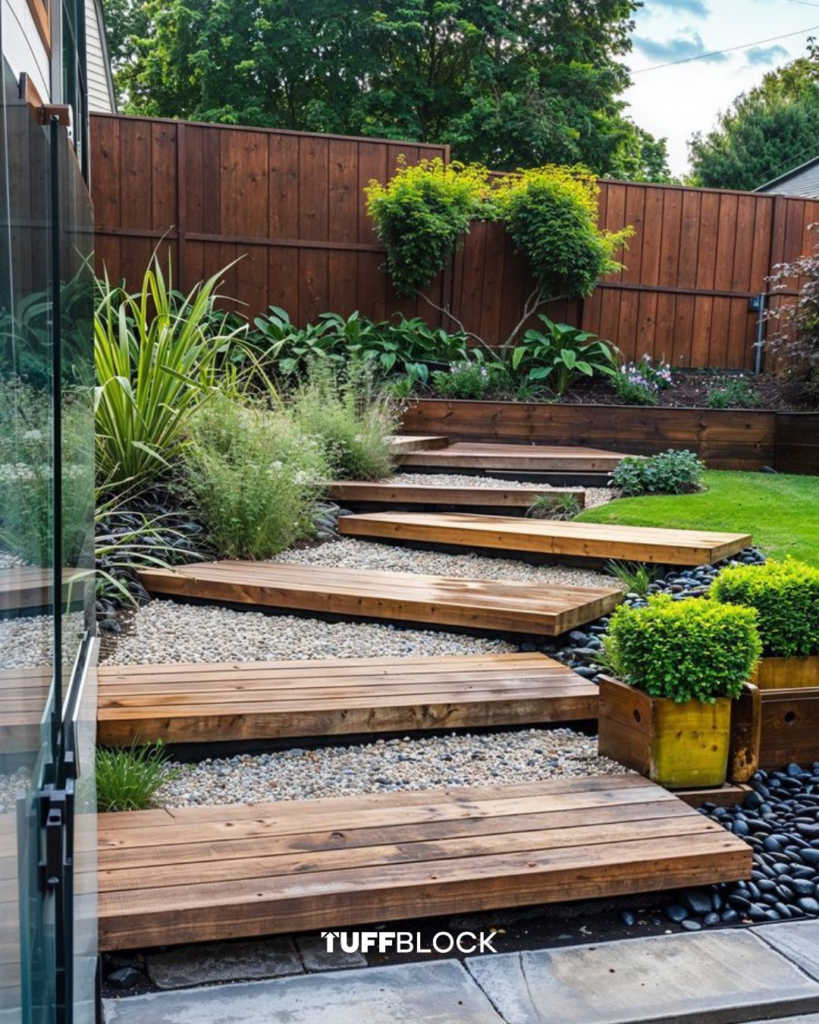
Floating timber steps arranged with precision over gravel or pebbles create rhythm and flow. This garden design balances geometry with natural greenery, forming a subtle tempo that guides visitors gently through the space.
Well-placed foliage and topiary accents frame the pathway, giving it a polished yet approachable look. Such design merges architectural order with natural softness, perfect for homeowners who want modern, structured landscaping without sacrificing warmth.
Serpentine Path Charm
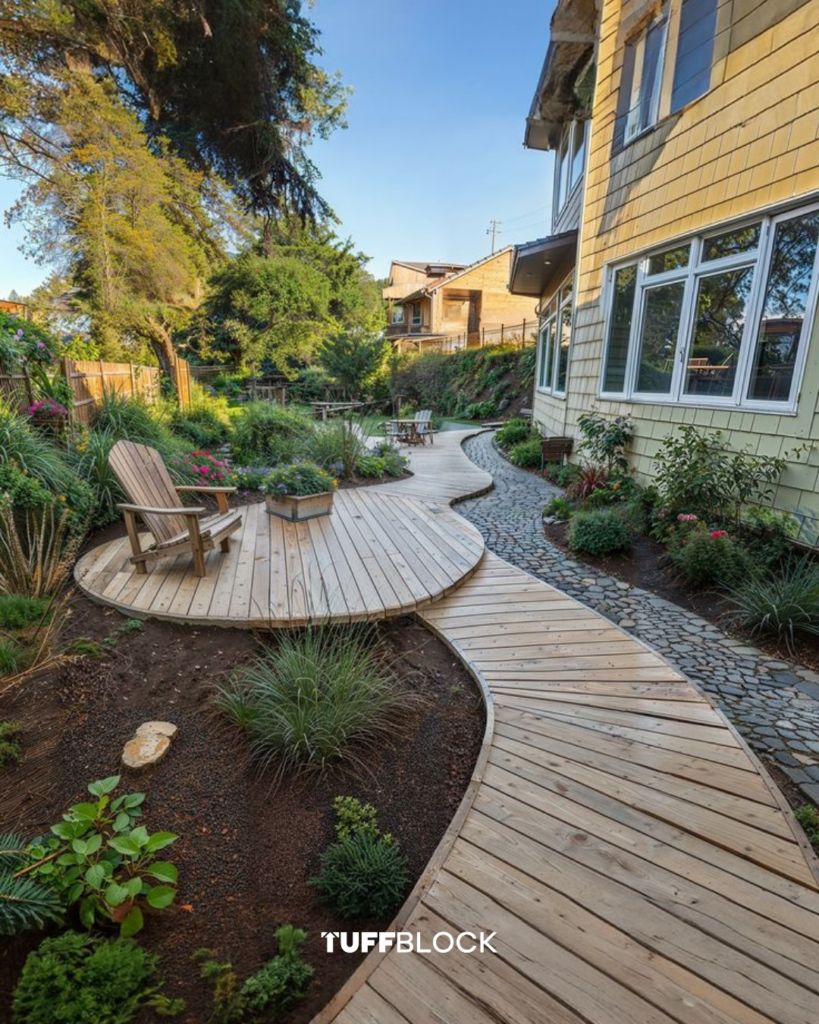
Curved wooden walkways create a slow, contemplative pace. Gentle bends guide footsteps to cozy outdoor lounge areas, encouraging lingering moments among soft wood textures, blooming borders, and cobbled stone edges.
These pathways are less about speed and more about experience, inviting garden users to pause, breathe, and interact with the environment. The serpentine design emphasizes flow, movement, and storybook appeal.
Hillside Harmony
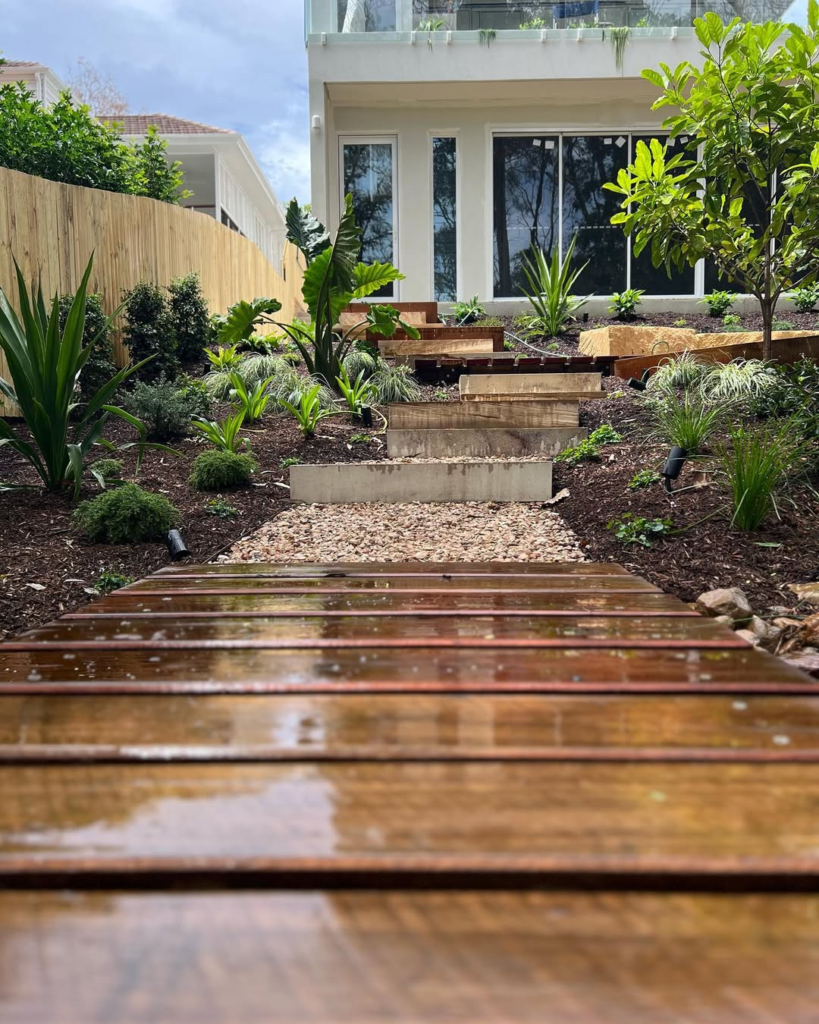
A stepped timber pathway built into a natural slope offers balance between landscape and structure. Raw wood blends with mulch and plantings, while geometric landings punctuate the climb for rhythm and rest.
This design feels deliberate yet unforced, combining rugged natural elements with smart architectural solutions. Hillside walkways like this integrate function, style, and nature, making them ideal for sloped gardens that demand both practicality and aesthetic coherence.
Modern Courtyard Lushness

Linear wooden paths create calm, framed by climbing ivy and slender trees. The path feels intimate yet open, perfect for quiet mornings or reflective moments.
Leaves and natural textures add understated elegance, allowing the walkway to complement rather than dominate the space. This approach works especially well in courtyard gardens, balancing minimalist design with vibrant life.
Classic Meets Contemporary
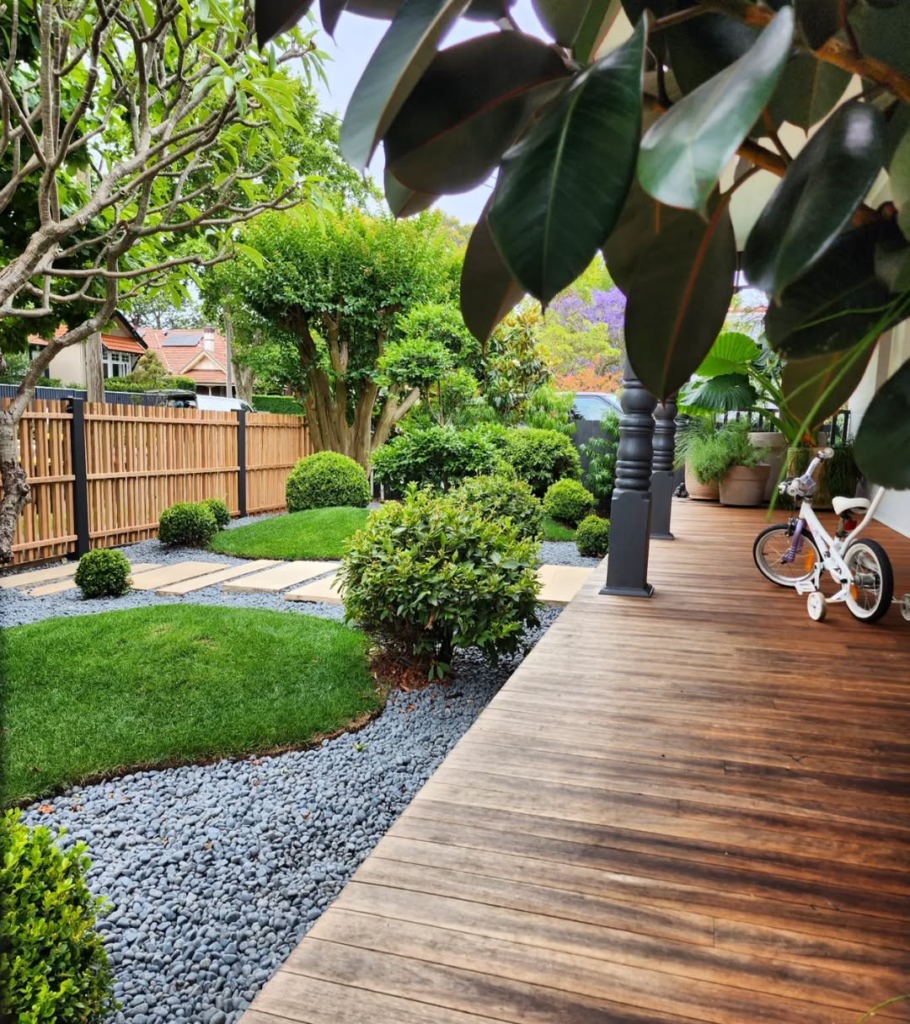
A well-structured backyard path blends manicured hedges, black river rock edging, and smooth timber boards. The juxtaposition of soft greenery with clean wooden decking allows barefoot wandering and casual strolling.
This design strikes a perfect balance between classic garden charm and contemporary practicality, suitable for both small gatherings and peaceful solo walks.
Fern-Filled Escape
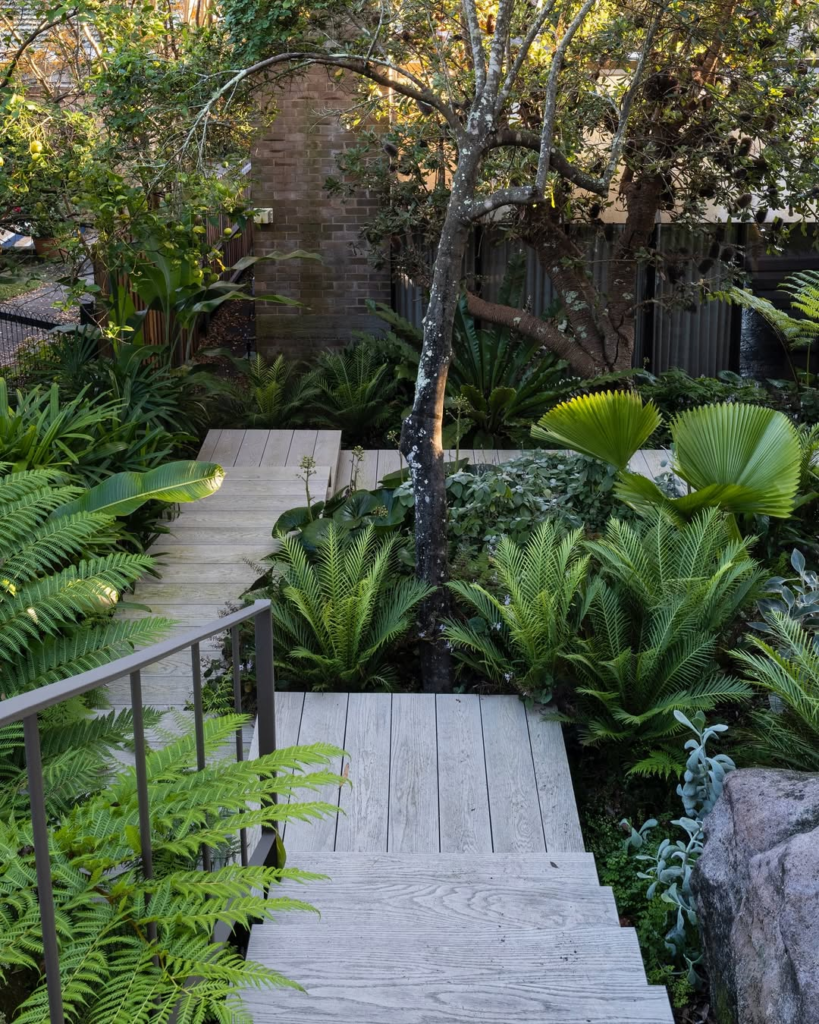
A forest-inspired pathway winds through dense ferns, palms, and trees, offering seclusion and serenity. Timber boards almost disappear beneath the foliage, creating a secret, immersive garden experience.
Shaded dappled light and layered plantings enhance the sense of calm, giving visitors the impression they’ve stumbled upon a hidden paradise. Walkways like this emphasize immersion in nature over formal symmetry.
Garden Gathering Path
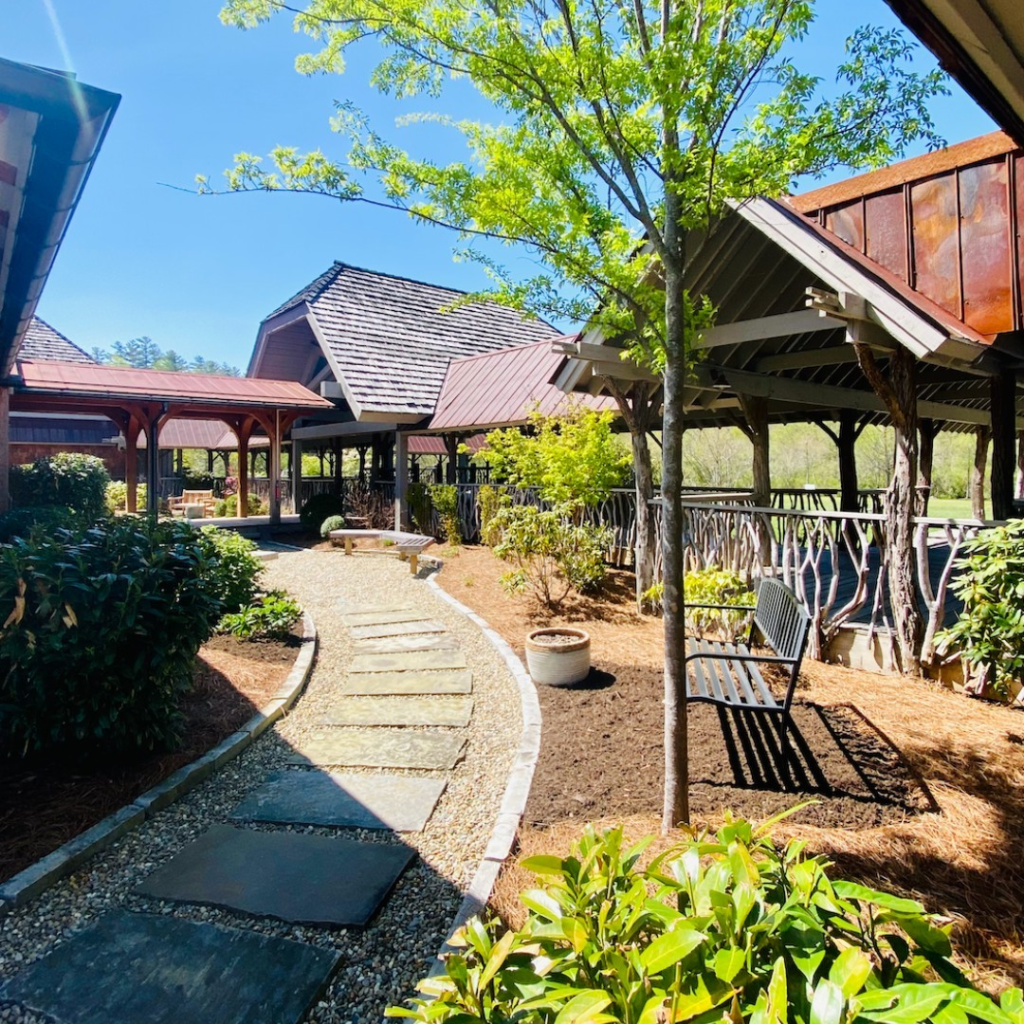
Stone and gravel paths curve gently through landscaped areas, guiding visitors past benches, gazebos, and planting beds. The organic layout encourages conversation and relaxation, making outdoor spaces feel alive yet intentionally curated.
These paths balance functionality with comfort, perfect for creating social or contemplative garden zones.
Woodland Bridge Whimsy

A narrow wooden footbridge over a small stream adds fairytale charm to any woodland garden. Uneven planks and mossy textures enhance the natural feel, encouraging barefoot exploration and playful wandering.
This design celebrates imperfection, blending rustic energy with practical movement and immersive storytelling.
Sleek & Sculpted Side Yard
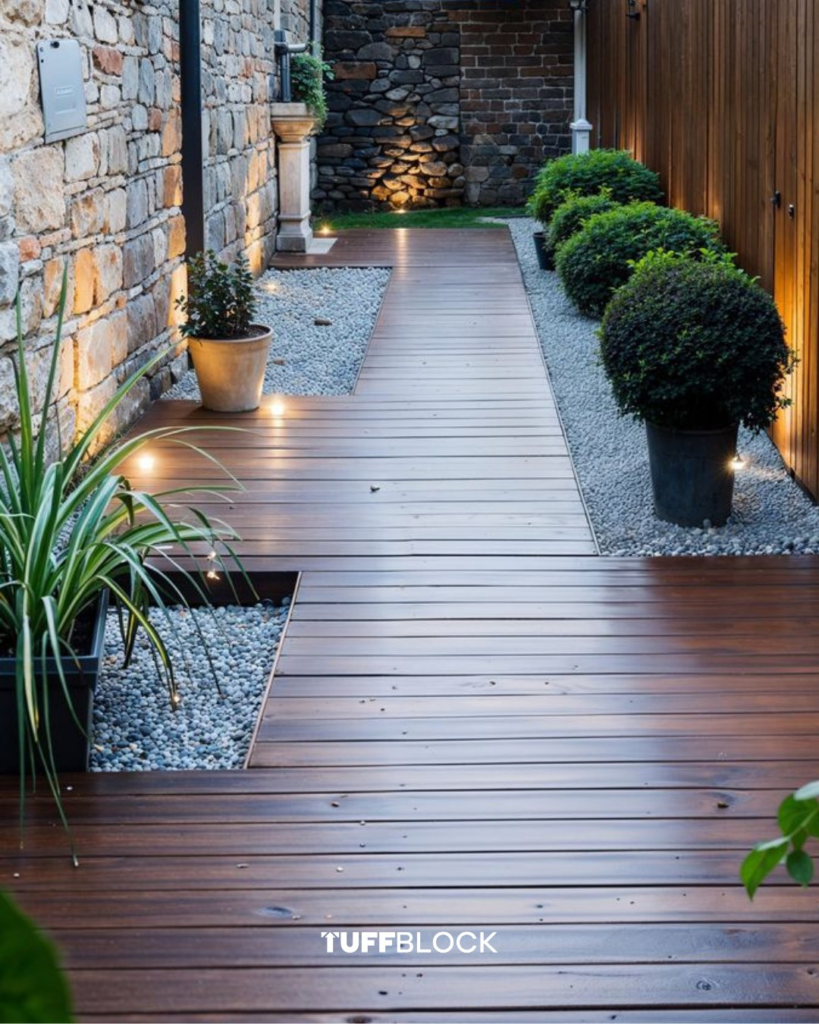
A side yard can feel intentional when enhanced with wooden decking, potted plants, gravel inlays, and subtle uplighting. Long planks elongate the space, while greenery softens edges. In the evening, uplights create drama and highlight textures.
Thoughtful design turns overlooked spaces into high-style, functional extensions of the home.
Floating Zen Steps
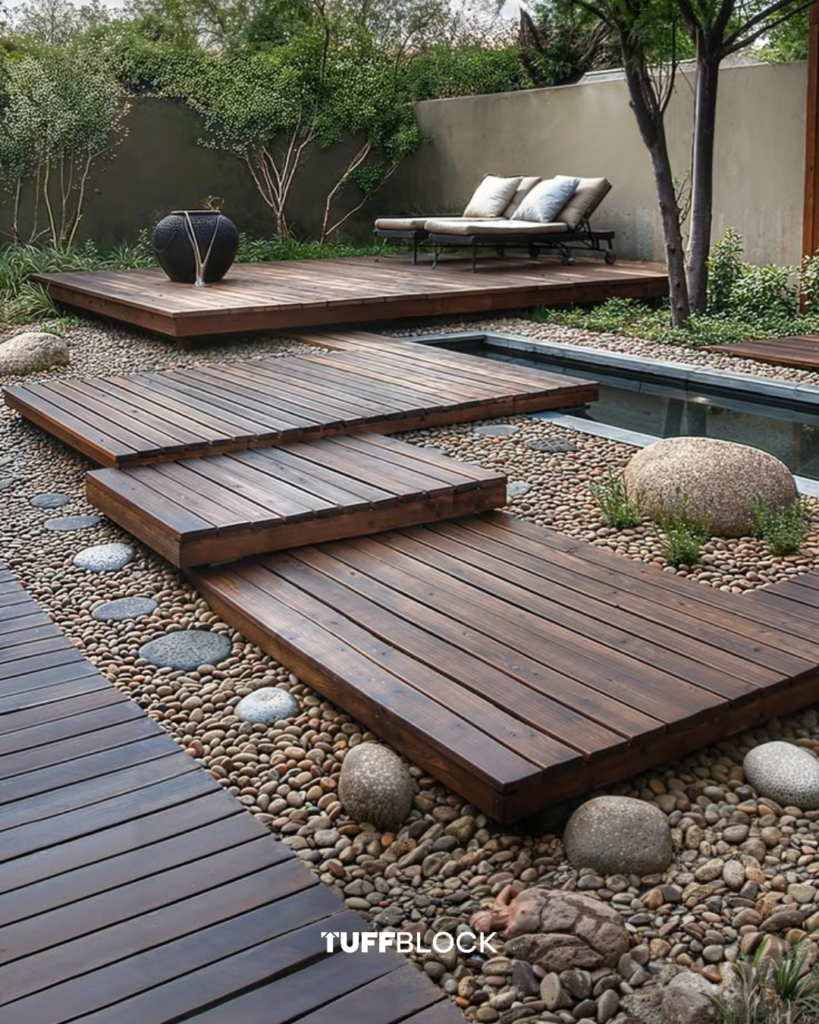
Broad floating wooden steps over a bed of pebbles evoke a minimalist, spa-like feel. Sculptural boulders, greenery, and clean lines enhance the meditative quality, creating a space designed for slow, mindful movement.
These pathways encourage grounding, contemplation, and mindful walking in any garden setting.
Curves That Slap
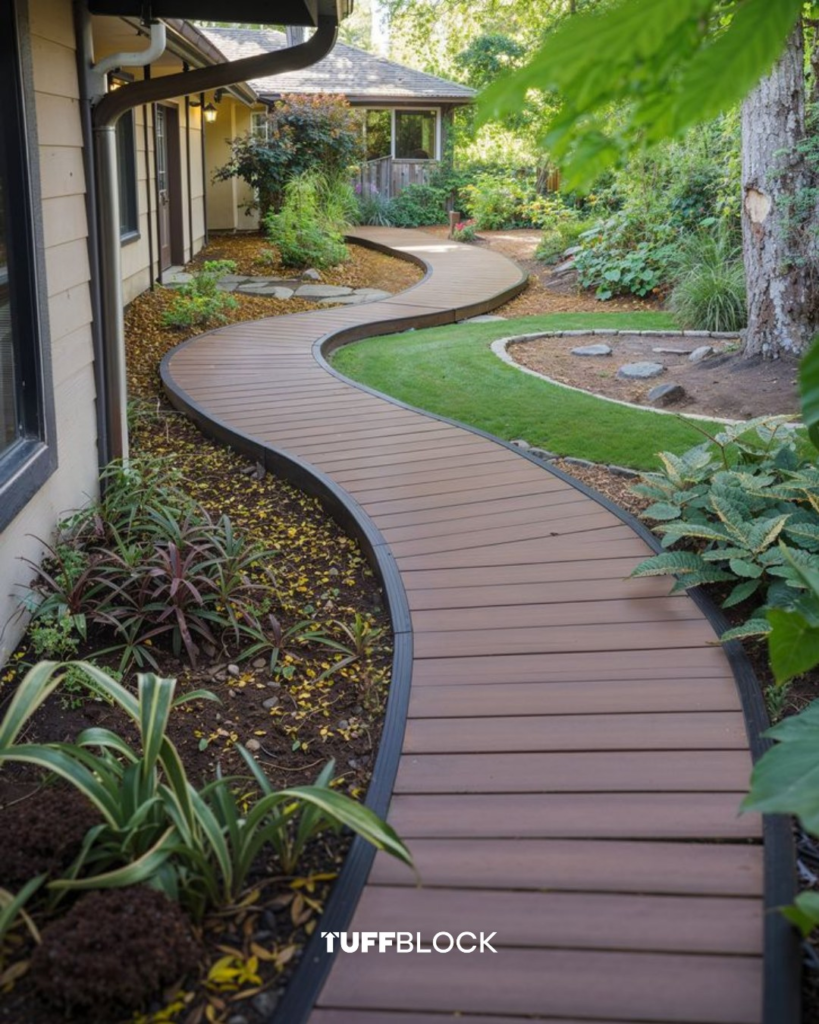
A raised, curved composite decking path weaves elegantly through lush plants and trees, combining upscale zen with playful edge. The fluidity of the curve draws the eye, while the precision of the border adds structure.
This design delivers both sophistication and personality, making visitors take notice without overwhelming the natural charm of the garden.